
Randye Rutberg
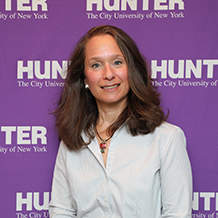 Assistant Professor
Contact:
Email: randye.rutberg@hunter.cuny.edu
Phone: 212-772-5326
Office: 1043 HN
Biography:
Professor Rutberg completed her B.A. in Environmental Studies at Barnard College and her Ph.D. in Earth and Environmental Science at Columbia University. Currently, her research interests include the application of isotopic tools to paleoceanography and the investigation of the mechanisms of glacial interglacial climate change. Her research has focused on using paleoceanographic proxies to improve knowledge of thermohaline ocean circulation and climate on glacial interglacial timescales. Her more recent work uses output from the POP3 Ocean Model to understand how the commonly used tracer d13C responds to forcing at the sea surface. Prof. Rutberg is using the model output to understand the timescale of water propagation from the surface to the deep ocean and what these timescales imply about proxy records obtained from the interior ocean. This work, published in peer reviewed journals, is important to developing a better understanding of the ocean's role in glacial interglacial climate change, and ultimately in future climate change. Most recently, Professor Rutberg has been investigating the role of atmospheric and ocean circulation in the Antarctic region and how they may effect atmospheric CO2 concentrations on glacial interglacial times. In the near future, Professor Rutberg plans to join a research project investigating the role of extra-terrestrial impacts on climate during the last twenty thousand years. This work combines geochemical, geomorphological and anthropological approaches to identifying and dating potential impacts.
Prof. Rutberg's main educational interest is in developing an appropriate curriculum for the department's Environmental Studies major. She has helped develop and refine this curriculum and is currently interested in better defining the skills and knowledge appropriate for the hierarchy of courses within this major. In addition, she has established a new Five Year BA/MA in Earth Science and Adolescent Education. Prof. Rutberg has taught, Physical Geology, Oceanography, Honors Geology, Honors Seminar on Science and New York City for the CUNY Honors College, Earth System Science I and , Geomorphology and Global Climate Change. She is interested in developing future courses in Environmental Science and Geochemistry. In addition, Professor Rutberg is interested in incorporating new technologies into her courses and has recently developed a web based Oceanography course.
Education:
Ph.D. 2000 Columbia University, Department of Earth and Environmental Sciences B.A. 1992 Barnard College, Environmental Science
Research Interests:
The application of radiogenic isotopic tools to paleoceanography. Mechanisms of glacial interglacial climate change.
My research is focused in the field of paleoceanography. The overarching goal of paleoceanography is to reconstruct past ocean circulation. This is of interest because the ocean transports heat around the globe and plays an important role in climate and climate change. During the late Pleistocene epoch the Earth cycled into and out of glacial periods. By understanding how ocean circulation may have changed as the Earth cycled through vastly different climatic regimes scientists hope to gain an understanding of the intricate mechanisms underlying climate change.
Teaching Interests:
I currently teach Introductory Geology and plan to teach courses in Oceanography, Climate Change and Biogeochemical Cycling.
Projects:
Factors controlling climatically induced temporal changes in detrital strontium (Sr) in the South Atlantic Ocean isotope composition
I am using various proxies and grain size fractions in deep-sea sediments to quantify the influence of wind, ice, surface and deep ocean currents on sediment transport. The goal of this research is to understand why Sr isotopes in detrital sediments vary systematically with other climate signals and what this may tell us about circulation in the southeast Atlantic Ocean during the last glacial period.Rare earth elements (REE) in marine sediments and their application to evaluating neodymium isotopes as a paleoceanographic tool
The goal of this work is to understand the mobility of the REEs in a variety of marine sedimentary environments. This will establish the suitability of such sediments as recorders of past seawater Nd-isotopes, allowing this exciting and underutilized system to improve our understanding of past ocean circulation and ocean inputs.The Viability of Sr and Nd Radiogenic Isotopes as Paleoceangraphic Tools in the Indian Ocean
The goal of this study is to determine whether Sr isotopes in the detrital component of core tops from the southern Indian Ocean are useful tracers of ocean circulation in this region, as they have been shown to be in the southeast Atlantic Ocean. If Sr isotopes prove to be a useful tool, they will add significant insight into Indian Ocean circulation change over the last glacial cycle. A second goal of this study is to map the authigenic Nd isotope composition from the same selection of core tops. This data will be used to evaluate whether the Fe-Mn oxide component of Indian Ocean sediments is a robust archive of seawater Nd.Mg/Ca as a Paleoceanographic Tool
I am currently completing a laboratory that will allow me to use Mg/Ca in foraminifera, microscopic marine organisms, to study paleoceanography. I plan to combine this tool with the other tracers described above to do multiproxy studies of ocean circulation during the late Pleistocene.
Courses Taught:
- GEOL 101 - Introduction to Physical Geology
- Honors GEOL 101
- GEOL 180 - Introduction to Oceanography


